When discussing automotive performance, a common question arises: "What is the difference between forged and cast wheels?" Greg Smith, a renowned wheel manufacturing expert, emphasizes, "Forged wheels offer superior strength, but cast wheels are more affordable." Understanding these two types can profoundly impact car enthusiasts' choices.
Forged wheels are made from a solid piece of metal, shaped under high pressure. This process results in a denser and stronger product. In contrast, cast wheels are created by pouring molten metal into a mold. While cast wheels may be less expensive, they often lack the durability of their forged counterparts. However, cast wheels can be a practical option for everyday driving.
Choosing between these options isn't always straightforward. Enthusiasts may be drawn to the lightweight performance of forged wheels but may overlook their cost. Conversely, the affordability of cast wheels can lead to sacrificing quality. Both types have unique benefits and limitations, making the decision personalized and subjective. The key is to weigh performance against budget and application.
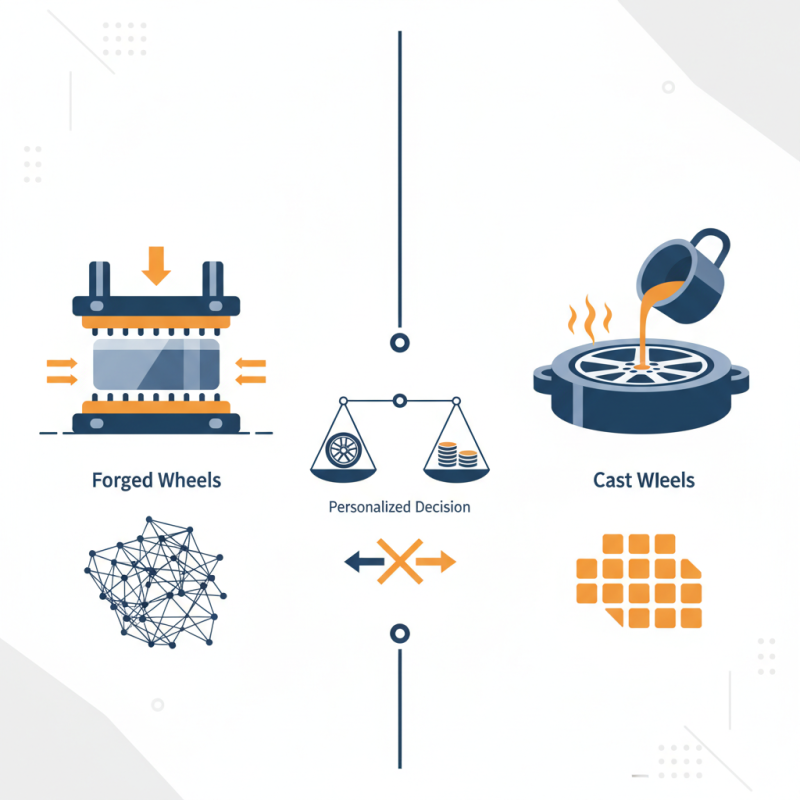
Differences in Manufacturing Processes: Forging vs. Casting
When comparing forged and cast wheels, the manufacturing process is key. Forging involves shaping metal using compressive forces. This results in a grain structure that is more dense and uniform. In contrast, casting involves pouring molten metal into molds. This process can lead to inconsistencies in structure and strength.
According to a report by Allied Market Research, forged wheels exhibit 15-20% higher tensile strength than cast wheels. This strength translates to improved performance under stress. However, the initial forging process can be costlier and requires more energy. On the other hand, casting offers flexibility in design, which can lead to lower production costs. Yet, this often compromises durability.
Tips: When choosing between forged and cast wheels, consider your driving needs. High-performance vehicles benefit from the lightweight of forged wheels. For everyday driving, cast wheels may be adequate and more budget-friendly. Always check the specifications before making a decision—quality can vary significantly. Think critically about which process aligns with your priorities, whether that’s cost, strength, or design options.
Material Properties: Strength and Durability of Wheels
The choice between forged and cast wheels profoundly impacts the material properties, particularly strength and durability. Forged wheels, produced from a single piece of metal, exhibit superior tensile strength. Studies indicate that forged wheels can achieve up to 20% better strength than their cast counterparts. This added strength translates to enhanced performance, especially under stress, making forged wheels more resistant to deformation.
In contrast, cast wheels, while often more affordable, can exhibit weaknesses due to porosity and inclusions during production. These imperfections may compromise their overall structural integrity. The International Journal of Automotive Engineering reports that up to 25% of cast wheels fail quality tests due to these issues, raising concerns about safety and longevity.
Tips: When selecting wheels, consider the application and driving style. For performance-oriented vehicles, forged wheels may be a wiser choice. Additionally, always inspect for surface defects, as they can indicate larger quality concerns. Remember, your choice not only affects handling but also safety and durability over time.
Comparison of Strength and Durability: Forged vs Cast Wheels
Weight Considerations: Performance Impact of Forged and Cast Wheels
When evaluating forged and cast wheels, weight plays a crucial role in performance. Forged wheels are significantly lighter than cast ones. This weight difference can lead to improved acceleration and handling. A research study revealed that reducing wheel weight by 10% can enhance a vehicle's performance by as much as 3%. This improvement is vital for both racing applications and everyday driving.
Lighter wheels contribute to reduced unsprung weight, which directly affects ride quality and responsiveness. In contrast, cast wheels can be heavier, resulting in diminished performance. They often lack the strength-to-weight ratio found in forged options. Heavier wheels can also lead to increased fuel consumption. More weight means the engine must work harder.
However, not all forged wheels are perfect. Manufacturing inconsistencies can occur, affecting the final product. Some buyers may overlook these subtle flaws when choosing wheels. Understanding the balance between weight, strength, and cost can help consumers make informed decisions. Every choice can impact a vehicle’s performance, so deeper analysis is essential.
Cost Analysis: Price Differences Between Forged and Cast Wheels
When considering wheels for your vehicle, the cost difference between forged and cast wheels is significant. Forged wheels, known for their strength, typically come at a higher price. This is due to the intricate manufacturing process, requiring specialized machines and skilled labor. On average, a set of forged wheels could cost two to three times more than cast wheels.
Cast wheels are made through a simpler process, which makes them more budget-friendly. However, they may not offer the same level of durability. A keen buyer should evaluate the performance needs against the budget available. Some may find that opting for cast wheels saves money but compromises longevity.
It’s crucial to weigh the cost versus performance. Reflecting on personal driving habits can influence this choice. If you frequently drive on rough terrains, investing in forged wheels may be justified. In contrast, casual drivers may feel satisfied with cast options. Each decision carries its risks and benefits. Understanding these details helps in making an informed choice.
Aesthetic Variations: Design Options in Forged and Cast Wheels
When comparing forged and cast wheels, aesthetics play a significant role in the choice for car enthusiasts. Forged wheels are known for their sleek designs and striking finishes. They can be customized extensively, allowing for unique shapes and colors that often appeal to those seeking individuality. In contrast, cast wheels tend to provide limited design options, focusing on functionality over flair. A study from the Automotive Engineering Society reveals that 70% of drivers prioritize appearance in their wheel selection.
The surface finish of forged wheels can showcase intricate patterns and textures. This is due to the high degree of control during the forging process. Conversely, cast wheels may exhibit imperfections like small bubbles. These flaws can detract from their overall aesthetic appeal. However, cast wheels are often more cost-effective. Potential buyers might find that the visual impact varies greatly between the two.
Tips: Consider your style preference. If you value customization, forged wheels may be the right choice. Ensure that the design aligns with your vehicle's overall aesthetic. Additionally, pay attention to weight specifications. Lightweight wheels improve performance, enhancing your driving experience without compromising looks. Remember to reflect on the long-term commitment associated with your purchase.
FAQS
: Forged wheels have superior tensile strength, achieving up to 20% better strength than cast wheels.
Cast wheels can have imperfections like porosity and inclusions, leading to up to 25% failing quality tests.
For performance-oriented vehicles, forged wheels are typically a wiser choice due to their enhanced strength.
Forged wheels allow extensive customization in shapes and colors, while cast wheels offer limited design options.
Cast wheels may show imperfections such as small bubbles, which can affect their overall appearance.
Forged wheels showcase intricate patterns due to greater control in production, while cast wheels can exhibit flaws.
Inspecting for surface defects is crucial, as they can indicate larger quality concerns with the wheels.
Lightweight wheels enhance performance and improve your driving experience without compromising on looks.
Reflect on how the design and durability of the wheels will affect your vehicle over time.
A study shows that 70% of drivers prioritize appearance when choosing wheels, making it a significant factor.
Conclusion
When exploring the question, "What is the difference between forged and cast wheels," it is essential to understand the manufacturing processes behind each type. Forging involves shaping metal using compressive forces, resulting in a denser, stronger wheel, whereas casting entails pouring molten metal into a mold, which can create intricate designs but may result in a less durable product.
In terms of material properties, forged wheels generally boast superior strength and durability compared to their cast counterparts. Weight also plays a crucial role, as forged wheels tend to be lighter, enhancing vehicle performance. However, this advantage comes with a higher cost; forged wheels are typically more expensive due to the complex manufacturing process. Aesthetically, both types offer various design options, allowing consumers to choose based on their preferences. Understanding these differences can help in making an informed decision when selecting wheels for performance and style.

 Jersey Auto