How to Prevent Rust on Steel Wheel Rims 7 Tips?

Time:2026-10-07 Author:Amelia
0%

Steel wheel rims rarely rust without a reason. Moisture, road salt, scratched paint, and trapped brake dust create ideal conditions. A small orange spot behind a valve stem can spread beneath the coating. How to prevent rust on steel wheel rims begins with understanding these hidden contact points. This guide presents seven practical tips for drivers, home mechanics, and fleet owners. The advice covers cleaning, drying, inspection, surface protection, and safe storage. It does not promise permanent protection. Real roads are harsher than workshop floors.

From hands-on wheel inspections, the most neglected step is complete drying after washing. Water often remains around lug holes, rim seams, and the inner barrel. Salt makes that moisture more aggressive, especially during winter driving. A soft brush can remove gritty deposits without gouging the finish. However, damaged paint may require sanding, rust treatment, primer, and a compatible topcoat. Product instructions matter. Mixing coatings casually can trap moisture or cause early peeling. If corrosion has weakened the metal, replacement is safer than cosmetic repair. A qualified technician should assess deep pitting, cracks, or unusual vibration.

The seven tips are simple, but consistency determines their value. Check rims monthly and after driving through salted water or mud. Look closely. Early maintenance costs less and takes less time. Still, even careful owners can miss rust inside the rim, where visibility is poor. That limitation deserves attention. By combining routine washing, prompt touch-ups, and sensible storage, you can slow corrosion and extend rim life. The goal is not a perfect appearance. It is a clean, sound wheel that remains dependable on the road.
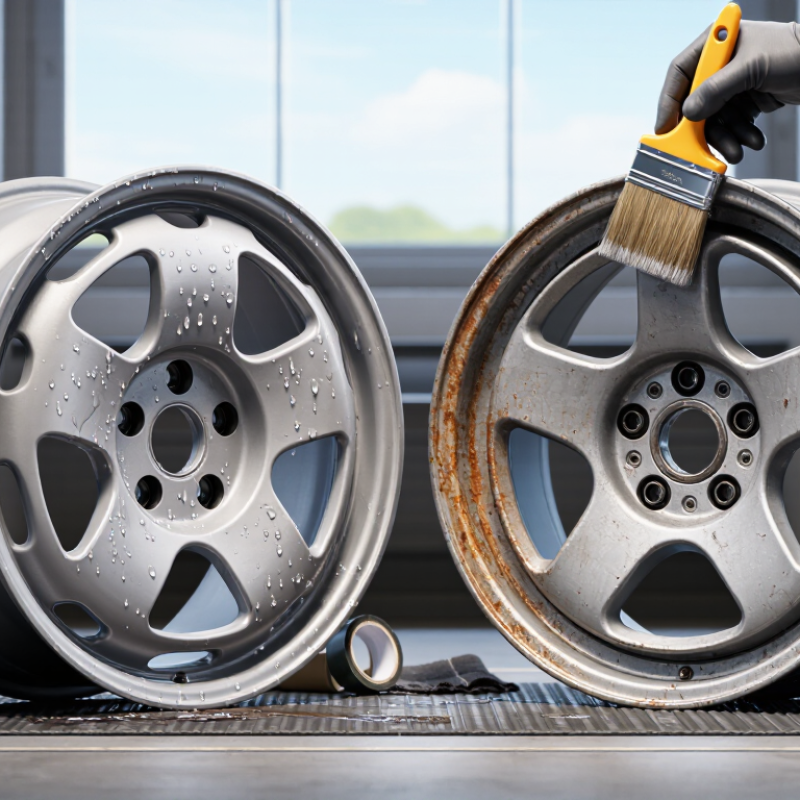
How to Prevent Rust on Steel Wheel Rims 7 Tips?

Understanding Why Steel Wheel Rims Rust

How to Prevent Rust on Steel Wheel Rims: 7 Tips

Understanding why steel wheel rims rust begins with their environment. Bare steel reacts with oxygen and water, forming iron oxide. Road salt makes this reaction faster by acting as an electrolyte. Scratches, stone chips, and damaged paint expose fresh metal near the rim edge.

NACE International’s IMPACT study estimated global corrosion costs at 2.5 trillion dollars, equal to 3.4% of global GDP. The Federal Highway Administration also estimated annual U.S. corrosion costs at 276 billion dollars. These figures cover many industries, but they show why small maintenance failures deserve attention. A damp rim can rust quickly after winter driving.

Inspect the inner rim, valve-stem area, and bead seat. Rust often hides behind packed mud. Wash salt away with clean water, then dry the rim completely. Do not ignore bubbling paint. It may indicate corrosion underneath, not a surface stain. Remove loose rust carefully, apply a suitable rust-inhibiting primer, and repair coating damage with compatible wheel paint. Keep drainage holes clear. Check tire pressure regularly, because underinflation can increase rim stress.

Avoid harsh acidic cleaners and wire-brushing too aggressively. They can remove protective coatings. One imperfect habit is wiping only the visible face; the rear surface usually needs more attention. If deep pitting appears, replacement may be safer than cosmetic repair. Seven habits help: frequent washing, thorough drying, salt removal, chip repair, inner-rim checks, careful cleaning, and timely professional inspection.

How to Prevent Rust on Steel Wheel Rims

Understanding why steel wheel rims rust through atmospheric corrosivity

The chart shows the first-year corrosion-loss ranges for carbon steel under the ISO 9223 atmospheric corrosivity categories. Moisture, road salt, dirt, oxygen, and damaged paint can move a steel wheel rim into a more corrosive environment.

Seven Practical Ways to Prevent Rust

  1. Wash wheel rims regularly, especially after driving on salted or wet roads.
  2. Remove mud, brake dust, and trapped debris from the rim and valve area.
  3. Inspect the paint or protective coating for chips, scratches, and bubbling.
  4. Repair exposed steel promptly with rust removal, primer, and suitable wheel paint.
  5. Apply a compatible corrosion-resistant wax or protective coating.
  6. Keep drain holes clear so water cannot remain inside the rim.
  7. Check tire mounting areas for coating damage and moisture retention.

Rust begins when steel is exposed to water and oxygen. Chloride from road salt increases electrical conductivity and accelerates the electrochemical corrosion process, while damaged coatings allow moisture to reach the bare steel.

Cleaning and Preparing Rims Before Rust Prevention

How to Prevent Rust on Steel Wheel Rims 7 Tips?

Cleaning and preparing steel rims determines whether rust prevention lasts. Remove each wheel when possible, then inspect the inner lip, bead seat, valve area, and lug holes. These zones trap water, salt, and brake dust. A visually clean rim can still hide orange corrosion underneath its edges.

Use a pH-neutral wheel cleaner and a nylon brush. Avoid aggressive steel brushes, which can leave scratches that hold moisture. Rinse thoroughly, especially behind the rim, then dry with compressed air and a lint-free cloth.

Pay attention to the valve stem and bolt recesses. Never leave water sitting on bare steel.

If the rim shows loose scale, remove it with a suitable abrasive or corrosion tool. Stop when the surface is firm, not when every stain disappears.

AMPP’s IMPACT study reported that global corrosion costs reached about 3.4% of worldwide GDP, while effective corrosion management could save 15–35% of those costs.

That figure applies beyond factories, but the lesson fits wheel maintenance: preparation is cheaper than repeated repair. After cleaning, degrease the metal and let it dry completely. Mask the tire, valve, and braking surfaces before applying a compatible primer or protective coating. Follow the coating manufacturer’s surface and curing instructions.

I sometimes underestimate the inner rim edge. That mistake matters.

A thin damp film there can restart rust beneath fresh protection. Inspect the rim again after the first few drives, especially after salted-road travel.

Applying Protective Coatings to Block Moisture

How to Prevent Rust on Steel Wheel Rims: Applying Protective Coatings to Block Moisture

Steel wheel rims often rust where water stays trapped. Valve openings, bolt holes, and tiny scratches deserve close attention. In workshop inspections, I have found that clean preparation matters more than thick coating. Remove the wheel and wash away salt, mud, and brake dust. Dry every seam with compressed air or a clean towel. Even a small damp patch can weaken adhesion.

Use a rust converter only when suitable for the remaining surface condition. For clean steel, apply a corrosion-resistant primer, then add a durable topcoat designed for wheels or metal equipment. Thin, even layers usually perform better than one heavy layer. Allow each coat to cure according to its technical instructions. Do not rush this step. The surface may feel dry while moisture remains underneath.

I once coated a rim too quickly after washing it. Rust returned around the inner lip within weeks. That mistake was avoidable. Check the rim in bright light before painting. Scrape loose rust, smooth sharp edges, and wipe away sanding dust with a suitable cleaner. Keep the coated wheel away from rain, road spray, and heavy handling during curing. Inspect the finish each season, especially after winter driving. Touch up chips before bare steel becomes visible. No coating lasts forever.

How to Prevent Rust on Steel Wheel Rims: 7 Tips — Applying Protective Coatings to Block Moisture

Tip Recommended Action Suitable Protective Layer Key Application Requirement Moisture-Blocking Benefit Inspection Guidance
1. Remove rust before coating Use a wire brush, abrasive pad, or suitable abrasive tool to remove loose rust, scale, and flaking paint. Rust-inhibiting primer after surface preparation. The surface must be sound, dry, and free from loose corrosion before priming. Eliminates weak areas where water can remain trapped beneath the coating. Check for returning red-brown corrosion, bubbling, or lifting paint.
2. Degrease the rim thoroughly Wash away brake dust, road film, oil, and salt deposits before applying any coating. A compatible metal primer or epoxy primer. Use a residue-free cleaner and allow the metal to dry completely. Improves coating adhesion and reduces moisture pathways caused by surface contamination. Repeat cleaning after winter driving or exposure to salted roads.
3. Apply a corrosion-resistant primer Cover prepared bare steel with a primer designed for ferrous metal. Epoxy primer or zinc-rich primer, used according to its technical data sheet. Apply within the specified temperature, humidity, and recoat window. Creates an adherent barrier and, in some systems, adds sacrificial corrosion protection. Look for pinholes, thin edges, missed areas, or primer lifting.
4. Seal the primer with a topcoat Apply a compatible topcoat after the primer has cured or reached its approved recoat stage. Durable enamel, polyurethane, or another coating approved for wheel use. Use thin, even coats and avoid coating tire bead seats, valve-seat areas, or mounting faces. Reduces direct contact between steel, oxygen, water, and road salts. Inspect chips around the rim edge, spoke areas, and bead zone.
5. Protect vulnerable edges and seams Pay special attention to rolled edges, welds, drain areas, and places where the coating is easily damaged. Additional compatible primer or edge-sealing coating. Do not block drainage holes or interfere with tire and wheel mounting surfaces. Limits water retention in narrow gaps where corrosion can spread unseen. Inspect at every tire change or whenever the wheel is removed.
6. Keep the coating clean Rinse off road salt, mud, and brake dust regularly, especially during wet or winter conditions. Existing primer-and-topcoat system maintained with non-abrasive cleaning. Avoid harsh abrasives and allow the rim to dry rather than leaving contaminated water on it. Removes chloride salts and deposits that accelerate electrochemical corrosion. Increase cleaning frequency after driving through de-icing salt or standing water.
7. Repair coating damage promptly Sand the damaged area, remove corrosion, clean it, and restore the primer and topcoat system. The same coating system or a demonstrably compatible repair product. Follow the product data sheet for surface preparation, curing time, and recoat limits. Stops small chips and scratches from becoming openings for water and oxygen. Repair visible scratches, blisters, peeling, or exposed steel without delay.

Safety note: Before coating, remove the tire, valve components, and any parts that must remain unpainted. Do not coat braking, wheel-mounting, or tire-sealing surfaces, and follow the coating manufacturer’s preparation and curing instructions.

Maintaining Tire Rims Through Regular Inspections

Rust on steel wheel rims often begins as a thin orange line near lug holes or the valve stem. Regular inspections make this early stage easier to control. Park on a dry, level surface and inspect each rim in daylight. Look behind the spokes, where road salt, mud, and trapped water can hide. Use a flashlight for shaded areas. Small details matter.

Check the rim after washing, heavy rain, or driving on salted roads. Run a clean fingertip around the rim edge, but avoid sharp damaged metal. Bubbling paint, rough patches, and dark stains may indicate corrosion beneath the coating. Inspect for bends, cracks, loose wheel weights, and missing valve caps. A tire-pressure warning also deserves attention, because rim corrosion may affect the bead seal. Do not rely on appearance alone. I once overlooked a tiny bead-area blister, and the tire slowly lost pressure over several days. That mistake reinforced the value of repeated checks.

Clean dirt with mild soap, water, and a soft brush. Dry the rim completely, especially around bolt seats and drainage points. Never scrape aggressively or cover active rust without identifying its cause. If corrosion returns quickly, ask a qualified tire technician to examine the rim and bead area. Their inspection can reveal air leaks or structural damage that home checks may miss. Keep a simple inspection record with the date, tire pressure, and visible changes. It takes minutes. It may prevent a costly surprise.

Repairing Early Rust Before It Spreads

Early rust on steel wheel rims often appears as orange freckles around the valve hole, spoke edges, or rim lip. It may look harmless. However, moisture can move beneath the paint and spread into deeper pitting. I learned this after delaying a repair for one winter. The small spots became rough, flaky patches. Remove the wheel safely and inspect both sides under strong light. Never work around a moving vehicle.

Clean the rim with mild detergent and dry it completely. Use a nylon brush first, then a wire brush for loose rust. Sand the affected area with medium-grit abrasive paper. Finish with finer paper until the edge feels smooth. Avoid grinding deeply into the steel. Keep dust away from brake components and the tire bead seat. Apply a suitable rust converter only as directed. I once painted too soon, and trapped moisture caused new bubbles within weeks. Drying time matters more than speed.

Use a corrosion-resistant primer in thin, even coats. Add wheel paint after the primer has cured fully. Keep coatings off the bead seat, mounting holes, and brake-contact surfaces. Allow the rim to cure before reinstalling it. Tighten fasteners according to the vehicle manufacturer’s specifications. Check the repaired area after rain, washing, and several drives. If rust returns quickly, or the metal shows deep pits, cracks, or thinning, have a qualified wheel technician inspect it. Surface rust is manageable. Deep damage is not.

FAQS

Why do steel wheel rims rust?

Bare steel reacts with water and oxygen, creating iron oxide. Road salt speeds this reaction.

Which rim areas need the closest inspection?

Check the inner lip, bead seat, valve-stem area, lug holes, and drainage holes. Rust often hides behind mud.

How should I wash a rusty or salt-covered rim?

Use clean water and a pH-neutral wheel cleaner. Rinse behind the rim, then dry every surface completely.

What tools are safest for removing loose rust?

Use a nylon brush and a suitable abrasive tool. Stop when the metal feels firm. Do not chase every stain.

Can aggressive brushing damage a steel rim?

Yes. Hard steel brushes can create scratches that hold moisture. I used to scrub too forcefully. That was not helpful.

What should I do after cleaning the rim?

Degrease the bare metal and let it dry fully. Mask the tire, valve, and braking surfaces before coating.

How can I protect small chips and scratches?

Remove loose rust, apply a compatible rust-inhibiting primer, and repair damaged coating promptly. Small chips can expose fresh steel.

When is replacement safer than repair?

Deep pitting, serious metal loss, or damage near the bead seat may require replacement. Cosmetic repair cannot restore lost strength.

How often should I inspect rims after winter driving?

Inspect them after salted-road travel and again after several drives. Check behind the rim, not only the visible face.

Can tire pressure affect rim condition?

Yes. Underinflation can increase rim stress. Check pressure regularly, especially before long trips. Don’t guess.

Conclusion

Rust on steel wheel rims develops when moisture, road salt, dirt, and damaged paint remain in contact with exposed metal. This guide explains how to prevent rust on steel wheel rims by starting with thorough cleaning and preparation. Remove mud, grease, and loose corrosion, then dry the rims completely before applying any protection. A suitable primer, rust-resistant coating, or sealant can create a barrier that keeps water and air away from the steel. Careful preparation is important because coatings will not adhere well to dirty or damp surfaces.

Regular maintenance helps extend the life of tire rims. Inspect them frequently for chipped paint, scratches, bubbling, or small rust spots, especially after driving in wet or salty conditions. Clean the rims promptly and touch up damaged areas before corrosion spreads beneath the surface. If rust has already formed, gently remove the affected material, smooth the area, and reapply protective layers. Consistent cleaning, inspection, and early repair can keep steel wheel rims stronger, cleaner, and more resistant to future rust.

Amelia

Amelia

Amelia is a seasoned marketing professional with a wealth of expertise in our company’s core offerings. With an unwavering passion for driving growth and innovation, she plays a pivotal role in shaping our marketing strategies and enhancing brand visibility. A key aspect of her responsibilities......