What is the maximum load capacity of a wheel rim? It is not a universal number. The answer depends on the rim’s design, material, size, offset, fasteners, and certification. A 17-inch alloy rim may carry a different load from a visually similar steel rim. The difference can be critical.
The Tire and Rim Association Year Book provides industry reference data for wheel and tire applications. SAE International’s J2530 standard also addresses performance requirements for aftermarket wheels. These sources show why appearance alone cannot confirm safety. The rim’s stamped load rating, manufacturer documentation, and vehicle axle limits must be checked together. NHTSA tire-safety guidance similarly emphasizes correct loading and inflation. A small label matters.
Paul Haney, a recognized tire and vehicle-dynamics writer, offers a useful warning: “The tire is the only thing connecting the vehicle to the road.” His point also applies to the wheel supporting that tire. A rim operates under vertical weight, cornering forces, braking loads, and repeated impacts. A pothole can turn a modest-looking load into a severe stress event. Real-world inspection matters. Check cracks, bends, corrosion, missing markings, and uneven bead seating before calculating capacity. Do not confuse maximum load with recommended operating load. That mistake is easy. It is also dangerous.
This guide explains how to read wheel markings, verify manufacturer data, compare axle loads, and identify missing information. Some online charts appear precise but lack testing context. They should be treated cautiously. When specifications conflict, the wheel manufacturer or a qualified engineer should provide the final answer.
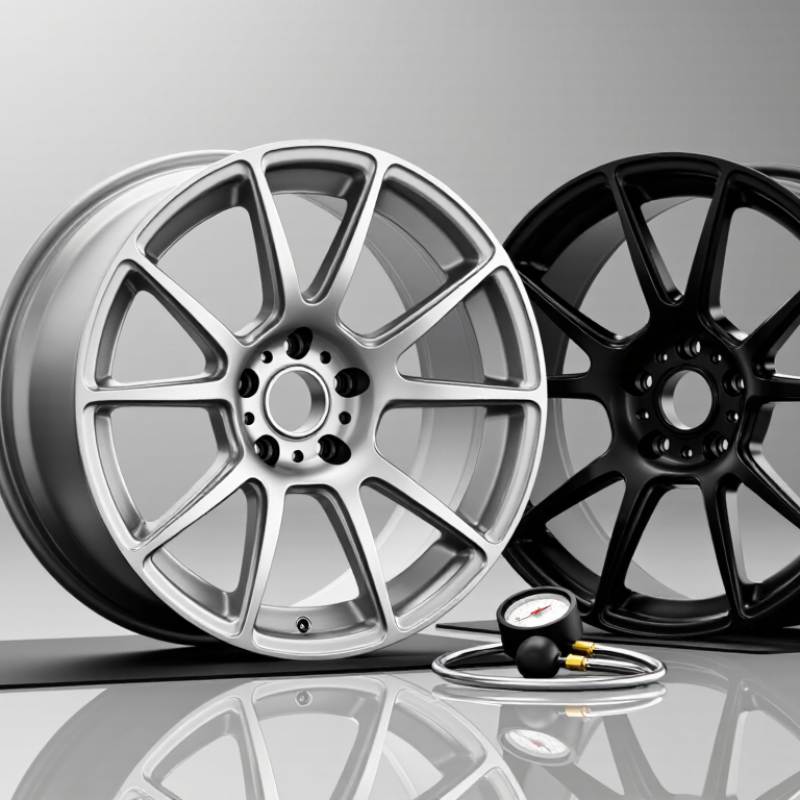
Understanding wheel rim load capacity starts with verified numbers, not appearance. Check the rim’s inner barrel, rear spokes, or certification documents for its maximum load rating. Then read the vehicle placard for the front and rear axle ratings.
For example, a 2,000-kilogram axle rating allows 1,000 kilograms per wheel under evenly distributed loading. Real conditions are rarely perfect.
A loaded corner can carry more weight during braking, pothole impacts, or sharp turns. SAE J2530 evaluates aftermarket wheels through radial fatigue, cornering fatigue, and impact testing. These tests reflect repeated forces rather than a single showroom measurement. UNECE Regulation No. 124 also covers approval requirements for replacement wheels. Use those references when a seller provides only vague claims.
Match the rim rating with the axle requirement, tire load index, and vehicle weight limit. The lowest rating controls the safe combination.
Measure carefully. A wider rim does not automatically carry more weight, and a larger diameter can still have a lower rating.
Check offset, bolt pattern, center bore, and fastener specifications as well. A fitting rim may remain unsuitable if its load capacity is inadequate.
One practical mistake is trusting a clean casting mark without confirming its unit, such as kilograms or pounds. Another is ignoring luggage or towing weight.
Recheck the calculation after passengers, tools, and cargo are added. When markings are damaged or missing, request test documentation from a qualified wheel engineer before installation.
The rim’s maximum load rating is usually stamped or cast into its inner barrel. You may need to remove the wheel safely to see it. Look behind the spokes, near the valve hole, or along the rim’s inside edge. Common markings include “MAX LOAD,” followed by kilograms or pounds. A small flashlight and a soft brush can reveal shallow lettering.
Do not confuse the rim rating with the tire’s load index. They describe different components. Record every number exactly, including units and decimal points. Some rims show a value such as 690 kg or 1,520 lb per wheel. If the marking appears unclear, photograph it from several angles. Paint, dirt, and corrosion can hide one digit. I have seen a worn “6” mistaken for an “8.”
Check the vehicle handbook and the wheel’s original documentation as supporting evidence. The lowest applicable rating controls the safe limit. Never estimate capacity from rim diameter, width, or appearance. A larger rim is not automatically stronger. If no rating remains visible, consult a qualified wheel specialist with the rim’s dimensions and identification marks. This step may feel cautious, but guessing can produce a serious error. Also inspect for bends, cracks, or repaired areas, because damage can reduce practical load capacity even when the stamped rating looks adequate.
Before checking a wheel rim, measure the vehicle in its actual operating condition. Include passengers, tools, spare parts, fuel, luggage, and any trailer nose weight. A nearly empty vehicle can hide the real load.
Start with the vehicle’s identification plate or service manual. Record the gross vehicle weight rating and each gross axle weight rating. These limits are different. The front axle may carry less than the rear axle, especially with heavy cargo behind the seats. Drive to a certified public scale when possible. Weigh the front axle, rear axle, and complete vehicle separately. Keep the vehicle level and loaded as it will normally travel. Small details matter. A toolbox can shift weight noticeably.
Next, read the rim’s stamped load rating or verify it through reliable technical documentation. Divide the measured axle load by the number of wheels supporting that axle, then compare the result with the lowest applicable rim rating. Do not rely on perfect weight distribution. One side may carry more because of the driver, fuel tank, or uneven cargo. Leave a sensible safety margin, and check the tire load rating as well. The rim, tire, axle, and vehicle rating must work together.
In workshop inspections, I have seen owners use curb weight alone. That estimate was too optimistic. A driveway calculation is useful, but it can miss concentrated loads. Recheck after adding equipment or changing suspension parts. Pay attention to damage, corrosion, and previous repairs. A strong-looking rim is not proof of adequate capacity.
Comparing rim capacity with required load is the most important safety check. Start with the vehicle’s axle ratings, not an average guess. The door placard and owner’s manual usually show these figures. Divide each axle rating by two for an initial per-wheel estimate. Then consider uneven cargo, passengers, towing, and dynamic road forces. A fully loaded rear axle may need more capacity than the front axle. The rim’s rated capacity must meet or exceed that real requirement. Use the lower value when ratings conflict. Never treat a larger diameter as proof of higher strength.
Inspect the rim for its stamped load rating, size, width, and approved pressure range. If the marking is unclear, request technical data from a qualified wheel supplier or inspection professional. Compare the rating with the heaviest expected wheel load, including cargo changes. Tire capacity also matters, but it does not increase the rim’s limit. The whole wheel assembly is only as reliable as its weakest part. In practical checks, small assumptions create large errors. I have found that estimating from appearance feels convenient, but it is not dependable.
How to Check the Maximum Load Capacity of a Wheel Rim?
Confirming Fitment and Safety Requirements
A wheel rim’s maximum load capacity is usually stamped on its inner surface or listed in its technical documentation. Clean the rim carefully before reading it. Dirt and brake dust can hide small markings. Compare this rating with the vehicle’s required axle load, tire load rating, and approved wheel specifications. The rim must meet or exceed the highest applicable requirement. I once saw a wheel that fit the bolt pattern but had a lower load rating. It looked correct. It was not a safe match.
Fitment involves more than diameter. Check the bolt pattern, center bore, width, offset, and brake clearance. Measure carefully, especially when using used wheels. Incorrect offset can affect steering, suspension clearance, and tire wear. Confirm that the tire size suits the rim width and vehicle guidance. If the documentation is unclear, ask a qualified wheel technician to verify the measurements. Guessing here is a poor shortcut.
Tips: Inspect for cracks, bends, corrosion, and repaired areas before installation. Use the correct fasteners and tighten them to the specified torque with a calibrated tool. Recheck torque after initial driving, if the service instructions require it. Do not rely on appearance alone. A wheel can look strong and still have hidden damage. When ratings conflict, stop and obtain written technical confirmation before fitting it.
| Inspection Dimension | Data to Confirm | Acceptance Requirement | Illustrative Example |
|---|---|---|---|
| Maximum rim load rating | Load rating marked on the rim, technical certificate, or manufacturer specification, in kg or lb. | The rim rating must be at least equal to the required load per wheel. Never use an unverified rating. | 700 kg per rim is greater than a calculated requirement of 600 kg per wheel. |
| Required load per wheel | The maximum permitted axle load divided by the number of wheels supporting that axle. | Use the axle load shown on the vehicle identification plate or official vehicle documentation. Do not substitute the vehicle's average curb weight. | 1,200 kg axle load ÷ 2 wheels = 600 kg minimum static capacity per wheel. |
| Unit conversion | Load rating may be shown in kilograms or pounds. | 1 kg = 2.20462 lb; 1 lb = 0.453592 kg. Convert units before comparing ratings. | 700 kg ≈ 1,543 lb; 1,500 lb ≈ 680 kg. |
| Wheel diameter | Nominal rim diameter, measured in inches, such as 16 in or 17 in. | Must match the tire's approved rim diameter. A tire designed for a 16-inch rim must not be fitted to a 17-inch rim. | A tire marked for a 16-inch rim requires a 16-inch rim diameter. |
| Rim width | Nominal width between the rim flanges, commonly stated in inches. | Must fall within the tire maker's approved rim-width range for the selected tire size. | A 7.0-inch rim is acceptable only when the tire specification lists 7.0 inches within its approved range. |
| Bolt pattern / PCD | Number of bolt holes and pitch circle diameter, for example 5 × 114.3 mm. | The hole count and PCD must match the vehicle hub exactly. Do not force mismatched bolts into the holes. | A 5 × 114.3 mm wheel is not a direct fit for a 5 × 112 mm hub. |
| Center bore | Diameter of the wheel's center hole and the vehicle hub's locating diameter, in millimeters. | The wheel must locate correctly on the hub. A larger bore may require correctly specified centering rings; a smaller bore will not fit. | A 67.1 mm wheel bore cannot be installed on a 67.5 mm hub without changing the wheel. |
| Offset | Distance between the wheel centerline and mounting face, expressed as ET or offset in millimeters. | Must remain within the vehicle's approved fitment range and provide adequate clearance to suspension and brake components. | A change from ET45 to ET25 moves the wheel outward by approximately 20 mm, subject to width changes. |
| Brake and suspension clearance | Clearance from spokes and inner rim to brake calipers, struts, control arms, and suspension parts. | No contact is permitted at full steering lock, full suspension compression, or during wheel rotation. | Perform a physical test fit and rotate the wheel before road use. |
| Tire load index | Load index printed on the tire sidewall, together with the tire's approved inflation pressure. | The tire capacity must also meet or exceed the required load per wheel. The rim, tire, and vehicle limits must all be satisfied. | A wheel rated for 700 kg does not make a tire rated for only 560 kg suitable. |
| Inflation pressure and valve compatibility | Maximum permitted tire pressure, recommended operating pressure, and suitable valve type. | Do not exceed the lowest pressure limit of the tire, rim, or valve assembly. Use a valve compatible with the rim design. | A pressure limit of 350 kPa equals approximately 3.5 bar or 51 psi. |
| Wheel and mounting condition | Cracks, bends, corrosion, damaged bolt seats, thread condition, and mating-surface cleanliness. | Reject wheels with structural cracks, severe deformation, damaged mounting seats, or corrosion that reduces structural integrity. | A visibly bent rim should be professionally inspected or replaced before installation. |
| Fastener specifications | Thread diameter, thread pitch, seat type, fastener length, and tightening torque. | Fasteners must match both the vehicle hub and wheel seat design. Tighten to the vehicle or wheel specification using a calibrated torque wrench. | Conical-seat and ball-seat fasteners are not interchangeable unless specifically approved. |
| Final load-capacity decision | Compare the rim rating, tire capacity, axle requirement, and any applicable legal or inspection requirement. | Approve the fitment only when every relevant rating and physical fitment condition is satisfied. Use the lowest limiting capacity. | Rim: 700 kg; tire: 680 kg; required load: 600 kg → capacity margin is limited by the tire at 680 kg. |
Look inside the rim barrel, behind the spokes, or near the valve hole. Use a flashlight and soft brush. The marking may say “MAX LOAD,” followed by kilograms or pounds. You may need to remove the wheel safely. Check carefully.
Copy every number exactly, including units and decimal points. Take photographs from several angles when the marking looks unclear. Paint, dirt, or corrosion can hide one digit. A worn “6” may look like an “8.” Small errors matter.
No. They describe different components. The rim rating limits the wheel itself. The tire load index limits the tire. Both ratings must suit the vehicle’s requirements. The lowest rating controls.
Check the vehicle placard for the front and rear axle ratings. An axle rating of 2,000 kilograms allows 1,000 kilograms per wheel under even loading. Real driving can shift weight between corners. Braking, potholes, and sharp turns increase local forces. Even loading is an assumption.
Not automatically. A wider rim may have a lower load rating. A larger diameter can also be weaker for its application. Never judge capacity from appearance, width, or diameter alone. Numbers matter more.
Check offset, bolt pattern, center bore, and fastener specifications. The rim should also match the tire and vehicle weight limits. A rim can fit physically but remain unsuitable. Its load capacity may be too low. Fit is not enough.
Add passengers, luggage, tools, and towing weight. Recheck the calculation after loading the vehicle. A corner may carry extra force during a sudden maneuver. The safe limit is not only the empty vehicle weight. Cargo changes everything.
Do not guess from size, shape, or casting appearance. Ask a qualified wheel specialist to review the rim. Provide its dimensions and identification marks. Request reliable test documentation before installation. Inspect for cracks, bends, and repaired areas. A stamped rating may not reflect damaged capacity.
Understanding a wheel rim’s maximum load capacity is essential for safe and reliable driving. The question “What is the maximum load capacity of a wheel rim” can be answered by locating the load rating stamped, engraved, or listed in the rim’s technical documentation. This value indicates the maximum weight one rim is designed to support under specified conditions.
To determine whether a rim is suitable, check the vehicle’s total weight, payload, and front and rear axle loads, paying particular attention to the axle carrying the greatest load. Compare the required load per wheel with the rim’s rated capacity, while allowing an appropriate safety margin. Also confirm that the rim matches the vehicle’s bolt pattern, diameter, width, offset, center bore, tire specifications, and clearance requirements. If any rating or fitment detail is unclear, consult qualified technical guidance before installation.

Jersey Auto