Best Ways to Measure Wheel Offset and Backspacing?

Time:2026-05-05 Author:Henry
0%

Understanding "How to measure wheel offset and backspacing" is crucial for both automotive enthusiasts and professionals. Accurate measurements ensure optimal vehicle handling and aesthetics. According to a report by the Tire and Rim Association, improper wheel offsets can lead to uneven tire wear and reduced performance.

Expert John Smith, a leading figure in automotive design, explains, "Precision in wheel measurement is key to enhancing vehicle stability and user experience." His insights underscore the significance of meticulousness when working with wheel specifications. Accurate backspacing can prevent issues such as brake caliper clearance and suspension contact.

Many people overlook these details. It's easy to make mistakes when measuring offset and backspacing, leading to serious consequences. Always double-check your measurements. For those who are not acquainted with these concepts, this guide will provide valuable knowledge. The path to perfect wheel fitment starts with understanding these measurements.
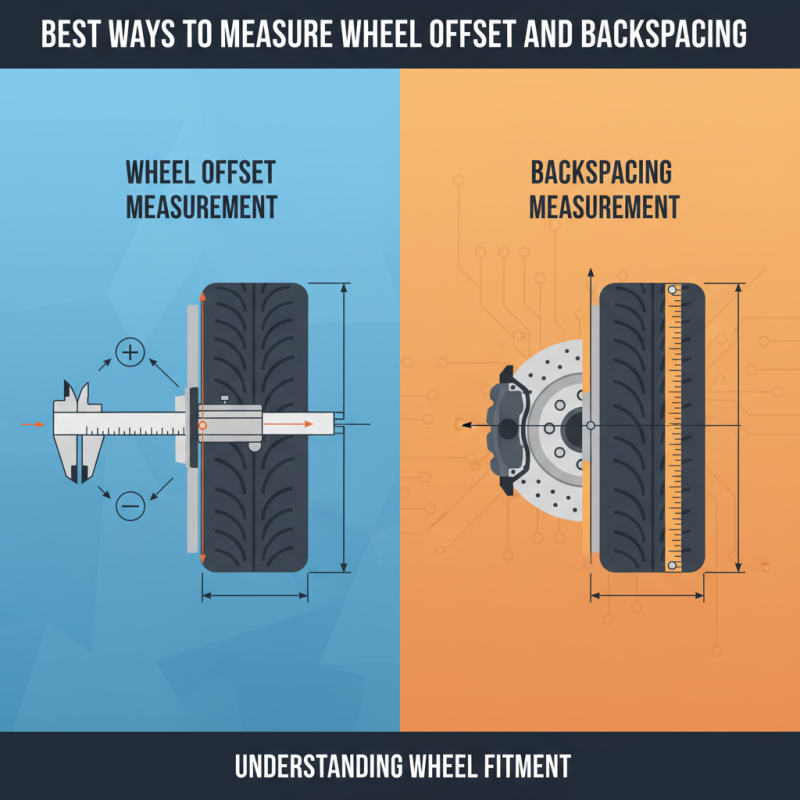
Best Ways to Measure Wheel Offset and Backspacing?

Understanding Wheel Offset and Backspacing Concepts

Understanding wheel offset and backspacing is crucial for any automotive enthusiast. Offset refers to the position of the wheel's hub mounting surface in relation to its centerline. A positive offset pushes the wheel inward, while a negative offset extends it outward. According to a 2022 automotive industry report, incorrect offset can lead to handling issues. It also increases tire wear and can cause suspension problems.

Backspacing is the distance from the wheel's mounting surface to the inner rim edge. It plays a significant role in ensuring that the tires fit without rubbing against the vehicle's frame or suspension components. A deeper backspacing can provide better stability but may limit tire size. Professionals recommend measuring backspacing with a straight edge and a ruler for accuracy.

Tips: Always confirm that the offset and backspacing match the specifications of your vehicle. Check your wheel well clearance before making a purchase. Consider consulting with an expert if you're unsure about measurements. Incorrect adjustments can lead to unexpected consequences, impacting performance and safety.

Tools Required for Measuring Wheel Offset and Backspacing

Measuring wheel offset and backspacing is vital for vehicle performance. To do this accurately, you need the right tools. A tape measure is a simple yet effective tool for this task. You can quickly gauge the width of the wheel. A caliper offers precision. It measures the distance of the mounting surface to the inner edge of the wheel.

In addition to these basics, a level can help ensure your measurements are even. Some enthusiasts prefer using a wheel offset gauge for maximum accuracy. This tool simplifies the process and reduces errors. However, you might still find discrepancies due to wheel variations.

Using these tools requires a steady hand and attention to detail. If you’re not careful, measurements can be off. This leads to potential fitment issues. Always double-check your readings for reliability. It’s better to be thorough than rushed. That's how you ensure optimal performance and safety on the road.

Step-by-Step Guide to Measuring Wheel Offset

Measuring wheel offset is crucial for proper fitment. Understanding wheel offset helps ensure your wheels fit correctly. A proper fit influences performance and handling. Here's how to measure it accurately.

Start by securing your vehicle on a level surface. Make sure the wheels are removed from the hubs. Take a straight edge, like a ruler, and place it across the back of the wheel. Measure the distance from the hub mounting surface to the inner edge of the wheel lip. This gives you the backspacing.

Next, measure the full width of the wheel. Divide this number by two to find the centerline. Subtract the backspacing from the centerline measurement. The result is the offset. A positive value indicates the wheel is farther inward, while a negative value shows it extends outward.

Tips: When measuring, double-check your work for accuracy. Mistakes in measurements can lead to fitment issues. Keep in mind that some vehicles may require specific offsets for performance wheels. Don't hesitate to do additional research or consult experts if needed.

Step-by-Step Guide to Measuring Backspacing

Measuring the backspacing of a wheel is essential for proper fitment. Start by placing the wheel upside down on a flat surface. Take a straight edge or ruler and lay it across the wheel's lip. This is the top edge of the wheel. Measure from the straight edge to the inner mounting surface of the wheel. This distance gives you the backspacing. Keep your measurement within the wheel's gaps to avoid errors.

Accuracy is key. Double-check your measurements. A slight mistake can lead to incorrect fitment. Always reset your ruler before each measurement to ensure consistency. It's also helpful to record your findings, as this can be compared with other measurements later. Have a friend assist you if needed; an extra pair of hands can make the process smoother. Sometimes the simplicity of the method belies its importance—don’t rush through it. Each measurement is crucial for optimal performance.

Interpreting Measurement Results for Wheel Fitment

Understanding wheel offset and backspacing is essential for vehicle fitment. These measurements determine how well a wheel aligns with the vehicle's suspension. Offset refers to the distance from the wheel's centerline to the mounting surface. It affects the vehicle's handling, tire wear, and overall fitment. Backspacing, on the other hand, is the distance from the wheel's rear bead seat to the mounting surface. Proper measurement and interpretation of these values ensure optimal performance and safety.

Recent industry reports indicate that a miscalculated offset can lead to tire rubbing and suspension issues. For instance, a difference of just 5mm in offset may seem minor but can significantly impact handling characteristics. Many enthusiasts overlook backspacing, which can lead to incorrect wheel placement. Wheels positioned too far inward can cause issues with brakes, while those too far outward may interfere with suspension components.

In practical terms, achieving the right wheel fitment demands precision. Tools for measurement should be available to enthusiasts and professionals alike. Despite the improvements in technology, mistakes still happen. Enthusiasts often misinterpret results, leading to costly errors. It’s vital to double-check measurements and seek guidance from reliable sources. Investing in accurate tools and education can prevent future misalignments and issues.

Best Ways to Measure Wheel Offset and Backspacing

FAQS

: What is wheel offset?

: Wheel offset is the position of the hub mounting surface relative to the wheel's centerline.

What happens with a positive offset?

A positive offset pushes the wheel inward towards the vehicle.

Why is measuring backspacing important?

Measuring backspacing ensures tires fit without rubbing against the vehicle’s components.

How do I measure backspacing?

Place the wheel upside down, use a straight edge, and measure to the inner mounting surface.

Why should I double-check my measurements?

Small mistakes can lead to incorrect fitment and affect vehicle performance.

Can incorrect offset affect my vehicle?

Yes, it can cause handling issues, increased tire wear, and suspension problems.

What should I consider before purchasing wheels?

Always check if the offset and backspacing match your vehicle’s specifications.

How can I avoid errors when measuring?

Reset your ruler before each measurement and consider recording your results for accuracy.

Is it beneficial to have assistance while measuring?

Yes, an extra pair of hands can help ensure more accurate measurements.

What do I do if I'm unsure about my measurements?

Consult with an expert for advice and verification before making any purchases.

Conclusion

When considering how to measure wheel offset and backspacing, it's essential to first understand the concepts behind these measurements. Wheel offset refers to the distance between the wheel's hub mounting surface and its centerline, while backspacing is the distance from the mounting surface to the back edge of the rim. Both measurements are crucial for ensuring proper wheel fitment, performance, and vehicle safety.

To effectively measure wheel offset and backspacing, specific tools such as a caliper or a measuring tape are required. The process involves a step-by-step guide that details how to accurately take these measurements. After gathering the data, interpreting the results will help determine if a wheel will fit your vehicle correctly, avoiding potential issues with clearance and alignment. Knowing how to measure wheel offset and backspacing can greatly enhance your wheel selection process.

Henry

Henry

Henry is a dedicated marketing professional with a profound expertise in the company's offerings. With years of experience in the industry, he possesses an impressive understanding of the market dynamics and consumer behaviors that drive success. Henry is committed to sharing his insights through......