Learning how to restore oxidized aluminum rims begins with recognizing what oxidation looks like. The surface may appear chalky, gray, or uneven, especially around lug holes and spoke edges. Brake dust often hides the damage. A careful inspection reveals more.
Professional detailer Mike Phillips is widely respected for his practical approach to automotive surface care. His advice is simple: “Always use the least aggressive method first.” That principle matters here. Harsh abrasives can remove valuable metal or damage a clear coat that still has life. A small test spot should guide the entire restoration.
How to restore oxidized aluminum rims depends on the rim’s finish, oxidation depth, and previous repairs. Start by washing the wheel with a pH-balanced cleaner, soft brushes, and plenty of water. Dry it completely. Then inspect the surface under bright, angled light. Light oxidation may respond to a dedicated aluminum polish and microfiber cloth. Severe oxidation may require wet sanding, polishing, and fresh protective coating.
Do not rush this work.
An experienced restorer will test a hidden area before treating every spoke. That step feels slow, but it prevents expensive mistakes. I have found that neglected rims rarely improve evenly on the first pass. Corners often need handwork. Deep stains may remain. That is not failure; it is useful evidence about the metal’s condition.
This guide will explain practical tools, safe preparation, polishing choices, and long-term protection. It will also question when restoration is sensible and when professional refinishing is the more reliable option.
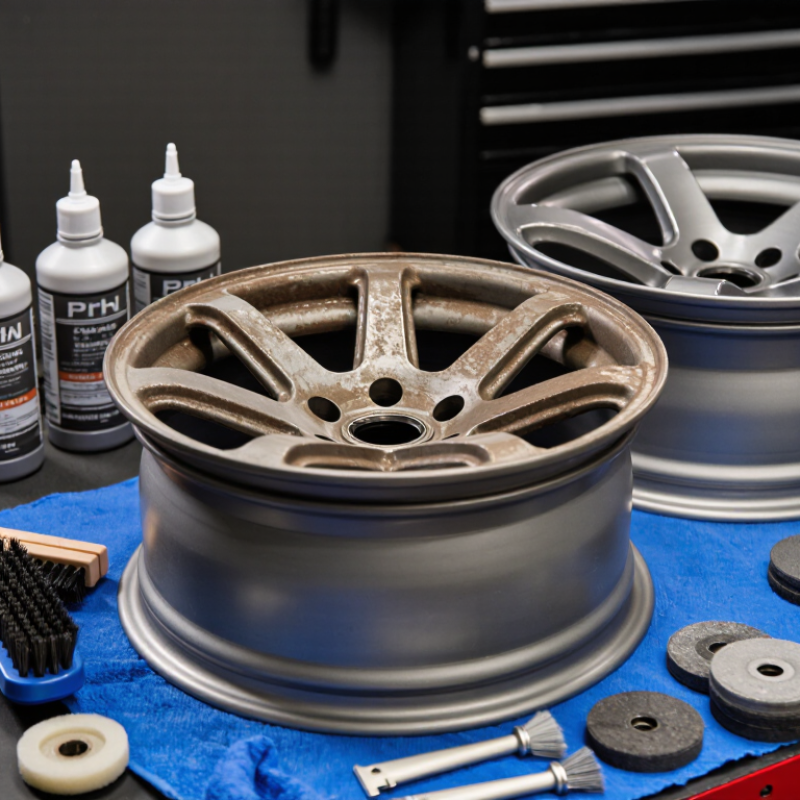
Restoring oxidized aluminum rims begins with a careful condition assessment, not aggressive polishing. Remove the wheel and wash away brake dust, road salt, and oily residue. Dry it completely, then inspect it under a bright, angled light. Oxidation often appears as chalky white patches, dull gray staining, or cloudy clear coat. Look closely around the spokes, valve hole, lug seats, and rim bead. These areas collect moisture and reveal corrosion earlier.
Use a plastic pick to test loose coating gently. Avoid metal tools. They can create scratches that look like corrosion. Light oxidation may leave the aluminum smooth beneath the haze. Deeper damage produces tiny pits, rough edges, or dark pores that catch a fingernail. Check for cracks, bends, and irregular bead surfaces too. Cosmetic restoration cannot correct structural damage.
A water wipe can reveal hidden discoloration. The surface may look healthy when dry, then show uneven marks when wet. Do not confuse baked brake dust with oxidation; dust usually feels gritty and sits on top. Photograph each damaged area before sanding or stripping. This creates a useful reference, although photographs can miss shallow pitting. I have found that quick inspections often underestimate corrosion near the inner rim. If pitting extends widely or the wheel loses its original shape, seek a qualified wheel specialist before continuing.
| Condition Level | Typical Visual Signs | Surface Condition | Recommended Restoration | Approximate Labor Time Per Rim |
Important Precaution |
|---|---|---|---|---|---|
| Light oxidation | Dull or hazy finish; small white or gray spots; no deep pitting. | Clear coat is mostly intact, with limited surface discoloration. | Wash with a pH-neutral cleaner, use a non-abrasive aluminum-safe polish, then apply a compatible protective coating. | 0.5–1.0 hour | Avoid steel wool, aggressive acids, and abrasive compounds that can remove the finish unevenly. |
| Moderate oxidation | White powdery deposits, cloudy patches, faded clear coat, and scattered staining. | Clear coat may be partially degraded; oxidation has spread across visible areas. | Remove the wheel if possible, clean thoroughly, wet-sand progressively with fine abrasive paper, polish the aluminum, and refinish with a suitable clear coat. | 2–4 hours | Use uniform sanding pressure and keep the original wheel profile; do not sand the tire, valve stem, or balancing weights. |
| Severe oxidation | Heavy white corrosion, rough texture, widespread peeling, dark stains, or visible pitting. | Protective coating has failed and the aluminum surface may have lost material. | Strip the failed coating, mechanically level the surface, inspect for cracks and deep pits, then polish or refinish. Professional repair is usually the safest option. | 4–8+ hours | Do not use the wheel if cracks, major bends, air leaks, or deep structural corrosion are present; obtain a qualified inspection. |
| Machined or polished face | Oxidation concentrated on the bright face, with visible machining lines or a reflective finish. | The surface appearance depends on precise contours and directional finishing. | Clean gently and polish only if the finish can be matched. Re-machining may be required when corrosion has reached below the original surface. | 2–6 hours | Hand sanding can create visible waves or remove the factory machining pattern; test a small area first. |
| Painted or coated finish | Blistering, flaking, chalking, edge corrosion, or discoloration beneath the coating. | The coating is separating from the aluminum and may be trapping moisture. | Remove loose coating, treat corrosion mechanically, clean and degrease the surface, apply an aluminum-compatible primer, and repaint or powder-coat. | 3–7 hours | All corrosion and residue must be removed before recoating; trapped contamination can cause rapid failure. |
| Deep pitting or structural concern | Craters, sharp cavities, severe bead-seat corrosion, cracks, or repeated loss of tire pressure. | Material loss may affect sealing, balance, or wheel strength. | Stop cosmetic restoration and arrange an inspection by a qualified wheel-repair specialist. Replacement may be more appropriate than refinishing. | Inspection required | Do not fill deep corrosion with cosmetic filler or continue driving when safety-related damage is suspected. |
Look for chalky white patches, dull gray stains, or cloudy coating under angled light. A wet wipe may reveal hidden discoloration. Oxidation can hide when dry.
Check the spokes, valve hole, lug seats, and inner rim for moisture-related corrosion. Look for pits, cracks, bends, rough edges, and uneven bead surfaces. Do not refinish structural damage.
Brake dust usually feels gritty and sits on top of the surface. Oxidation may leave pits, pores, or a rough texture beneath the damaged coating. Use a plastic pick gently, never a metal tool.
Polish can restore shallow oxidation and create a bright reflective finish. A protective coating usually resists humidity, salt, and brake dust better. Bare polished metal needs frequent care.
Wash away brake dust, oily residue, and road salt. Dry the rim completely before sanding or coating. Degrease first. Sand gradually with wet abrasive paper, from coarse to fine grades.
Uneven sanding, trapped residue, or thick coating layers can create cloudy areas. Direct sunlight often reveals defects that workshop lighting misses. I sometimes underestimate shallow damage. Test the finish inside the rim first.
Wash them every one or two weeks with clean water and a pH-neutral cleaner. Dry spoke edges, bolt holes, and valve areas with a soft towel. Do not leave salty film overnight.
Apply a compatible sealant or protective coating as directed. Inspect for chips, curb damage, and trapped water around the valve stem. Reapply protection when water no longer forms small beads. That test is useful, but not perfect.
Inspect the damaged area under bright light and check for coating failure. Small clear-coat damage is easier to repair than widespread white oxidation. Rinse more often in salty winter conditions. Seek qualified help if pitting spreads or the rim changes shape.
How to restore oxidized aluminum rims begins with a careful inspection of the rim’s condition. Identify oxidation, corrosion, scratches, peeling finish, and areas that may require more than basic polishing. Before starting, gather suitable cleaning supplies, sanding materials, polishing tools, protective gloves, eye protection, and adequate ventilation. Remove the wheel if appropriate, wash away dirt and brake dust, and allow the surface to dry completely.
Next, gently remove oxidation and corrosion with progressively finer abrasives, taking care not to create uneven marks or damage the rim’s shape. Once the aluminum is smooth and clean, restore its appearance with a suitable metal polish or apply a protective coating for longer-lasting results. Finally, maintain the restored rims by washing them regularly with mild cleaners, drying them thoroughly, and removing road contaminants before they build up. Periodic inspections and prompt care of new stains or oxidation will help preserve the finish and reduce the need for extensive restoration.

 Jersey Auto